
Plumbers in Waxahachie, TX
Your Neighborhood Plumber in the Heart of Waxahachie
Waxahachie is not plumbed like the rest of the metroplex, and anyone working here needs to know that before they start cutting. The Gingerbread City earned its name from the Victorian housing around the 1895 Ellis County Courthouse, and a good number of those homes still run original galvanized supply and cast iron drain lines that have been narrowing with corrosion for a century.
Then there is the other half of town. North Grove, Buffalo Ridge and the newer developments north along I-35E are recent construction with PEX manifolds and builder-grade fixtures, where the failures are early and completely different in character. A plumber in Waxahachie has to be equally comfortable rethreading into a 1910 supply line downtown and diagnosing a manifold in a five-year-old build. Ours are.
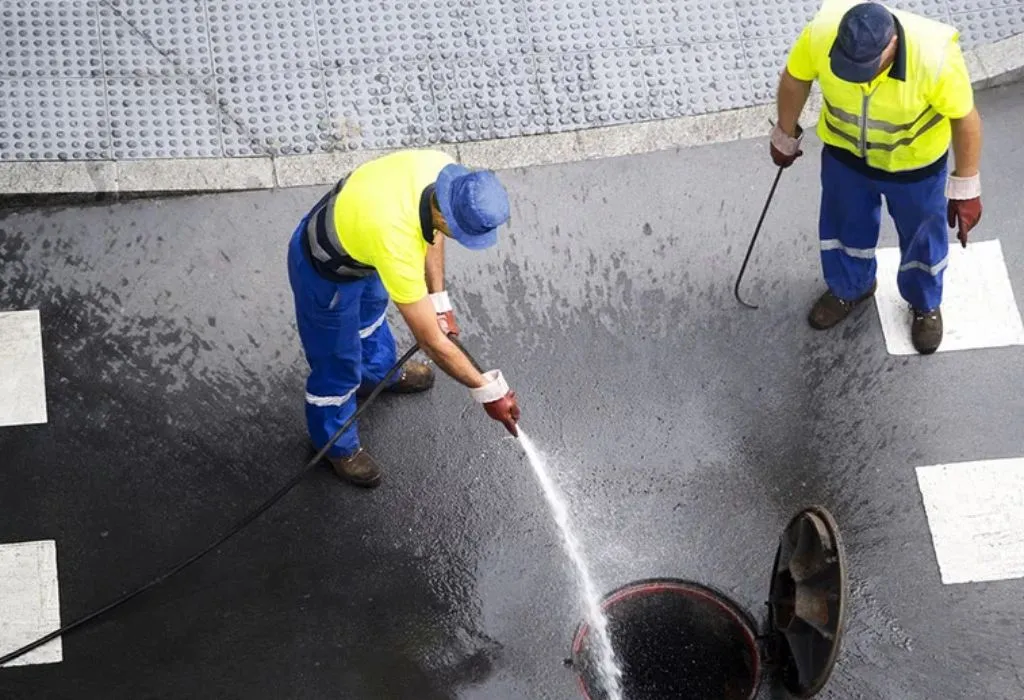
- We Offer Comprehensive Plumbing Services for Waxahachie residents.
With the most modern tools, our team of trained professionals can manage every facet of both the water and gas systems in your property.
- Why Choose Hire Local Plumber for Your Waxahachie Home?
Four things keep Waxahachie homeowners calling us back.
Local Response
Specialized Clay Soil Expertise
Advanced Technology
Clear Scope Before We Start
Common Plumbing Problems in Waxahachie Homes
Waxahachie splits cleanly into two plumbing worlds, and almost nothing carries over between them. A repair approach that is correct for a house near the courthouse would be the wrong call in North Grove, and the reverse is equally true.
Galvanized supply in the historic housing. The Victorian stock that gave the Gingerbread City its name often still runs original galvanized pipe. Galvanized corrodes inward, so the bore narrows year after year while the outside looks perfectly sound. The symptom is pressure that has quietly dropped at the furthest fixture, or rust-coloured water on first draw after the house has sat. Section-by-section rerouting is usually the sane answer, because a full repipe means opening lath and plaster that cannot be put back the way it came out.
Cast iron drains at end of life. The drain side of those same houses scales and corrodes from the inside until flow slows and the pipe wall goes thin. A camera tells you which it is, and that distinction matters: a scaled line can be descaled and coated, but a wall that has already perforated needs replacing. Jetting a pipe that is structurally gone can finish it off, which is why the inspection comes first.
Early failures in the newer north side. North Grove, Buffalo Ridge and the developments along I-35E are recent builds, and their problems are the opposite kind. Plastic angle stops seize, braided supply lines weep at the crimp, and the original water heater starts losing recovery around year eight. Nothing is worn out; the cheap components have simply reached the end of a short life.
Ellis County clay and mature trees. Both halves of town share the expansive clay that swells and shrinks with the seasons, opening slab leaks and pulling sewer joints out of true. On the older lots the mature canopy adds root intrusion, where roots enter at a joint and fan out inside the pipe. Several fixtures slowing at once is the sign that the fault is in the main line rather than in the fixture.
Plumbing Services Across Waxahachie and Ellis County
You want peace of comfort when you hunt for Waxahachie plumbers, not just a wrench. Our staff is situated in a way that allows them to respond to emergencies quickly, something that the national teams just cannot match. We recognize that in a plumbing emergency, each moment matters with regard to of avoiding damage caused by water.
Stationed Right Here in the Heart of Waxahachie
We have an understanding of every major neighborhood, including:
- North Grove: Modern solutions for newer, high-efficiency plumbing systems.
- Garden Valley: Expert leak detection and foundation-safe repairs.
- Historic Old Town: Specialized care for vintage piping and architectural preservation.
For an active burst or a sewer backup, our emergency plumber Waxahachie service runs day and night. For planned work, a scheduled visit from a plumber Waxahachie TX residents already know is a simpler call to make.
Frequently Asked Questions
Does Waxahachie water damage appliances and fixtures?
Yes. Water here carries a heavy mineral load, and the visible results are white scale on aerators and shower heads, cloudy glassware and water heaters that fail years early because sediment hardens over the burner surface. Flushing a tank heater annually slows it considerably. If scale has already started blocking fixture cartridges and valves, a whole-house softener is what stops it recurring.
Are tankless water heaters a good fit for Waxahachie homes?
In newer Waxahachie construction with gas already run, usually yes. You reclaim the closet space, stop paying to hold a tank hot overnight, and remove the sediment problem that shortens tank life in mineral-heavy Ellis County water. In an older downtown home the answer is more often no, at least not without upgrading the gas supply and venting first. We check the existing supply before recommending either way.
Why has my Waxahachie water bill jumped suddenly?
A sudden jump means water is escaping somewhere out of sight. The three usual causes here are an irrigation valve stuck open overnight, a toilet flapper passing silently, and a slab leak in a supply line where clay movement has worked a pinhole open. Shut every fixture off and watch the meter dial. If it is still turning, we can pinpoint the leak acoustically before any concrete gets cut.
Can you run a gas line for an outdoor grill or fire pit?
Yes. Outdoor gas for a grill, fire pit or patio heater is common work in the newer developments north of town. It is permitted and inspected work, and we scope it properly: correct pipe sizing for the appliance load, a dedicated shut-off, a sediment trap, and a pressure test held before the inspector arrives. It is not a job to hand to a handyman.
Do you work on historic homes in downtown Waxahachie?
Regularly, and it is careful work. The Victorian housing around the Ellis County Courthouse still carries original galvanized supply and cast iron drain lines, and both corrode inward until flow drops to a trickle. We camera before we cut, work around lath and plaster rather than through it, and reroute in sections where a full repipe would tear up finishes that cannot be replaced.